Daghan Kuzucu-Duchenne Muscular Dystrophy (DMD)-(Turkish)
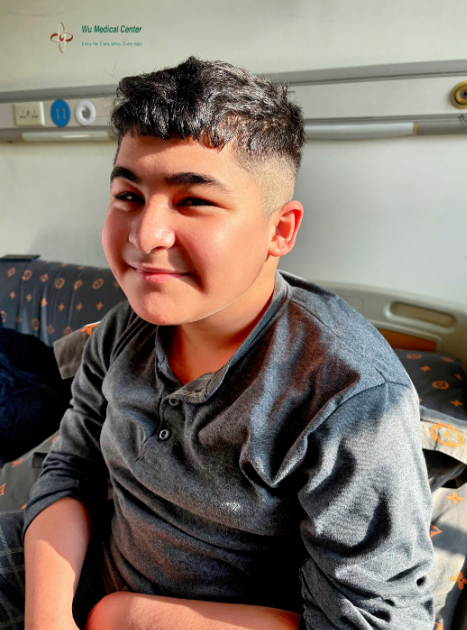 Patient's Name: Daghan Kuzucu
Gender: Male
Age: 12 years old
Nationality: Turkish
Diagnosis: Duchenne Muscular Dystrophy (DMD)
Pre - treatment Condition
The child was admitted to the hospital with a diagnosis of Duchenne Muscular Dystrophy, mainly due to "progressive weakness of limbs for 9 years and inability to stand for more than 3 years". His main symptoms included progressive muscle weakness, inability to stand or walk, when passive posture of the legs, difficulty in horizontal movement, inability to turn over or sit up independently, and obvious forward flexion of the head when in a passive sitting position. He had extremely sensitive pain perception in daily life and was prone to palpitations after physical activity.
Physical Examination on Admission
The child’s blood pressure was 114/72 mmHg, heart rate was 85 beats per minute, and respiratory rate was 20 breaths per minute. Clear breath sounds in both lungs, no moist or dry rales. Heart sounds were slightly low, with irregular rhythm. A systolic murmur could be heard over the precordium. His abdomen was flat and soft, with no hepatosplenomegaly.
Neurological Examination
The patient was conscious and articulate, with normal memory and calculation abilities. No abnormalities were found in the cranial nerve examination. He had weak neck rotation and shoulder shrugging strength, with muscle strength grade 3. The muscle strength of the shoulder girdle muscles, pelvic girdle muscles, and limbs was decreased: the proximal muscle strength of both upper limbs was grade 1, the distal muscle strength and grip strength were grade 2+. The proximal and distal muscle strength of both lower limbs was grade 1+. There was obvious pseudohypertrophy of the gastrocnemius muscles, and the ankle joints were deformed in a plantar flexion position. The muscle tone of all limbs was basically normal, while the tendon reflexes of all limbs were diminished. Pathological signs of all limbs were negative. The patient had spontaneous pain and tenderness in the limbs. He was unable to complete the bilateral finger - to - nose test due to muscle weakness, and the rapid alternating movement test was completed slowly and clumsily. The bilateral heel - knee - tibia test could not be performed due to muscle weakness. Meningeal irritation signs were negative.
Treatment Process
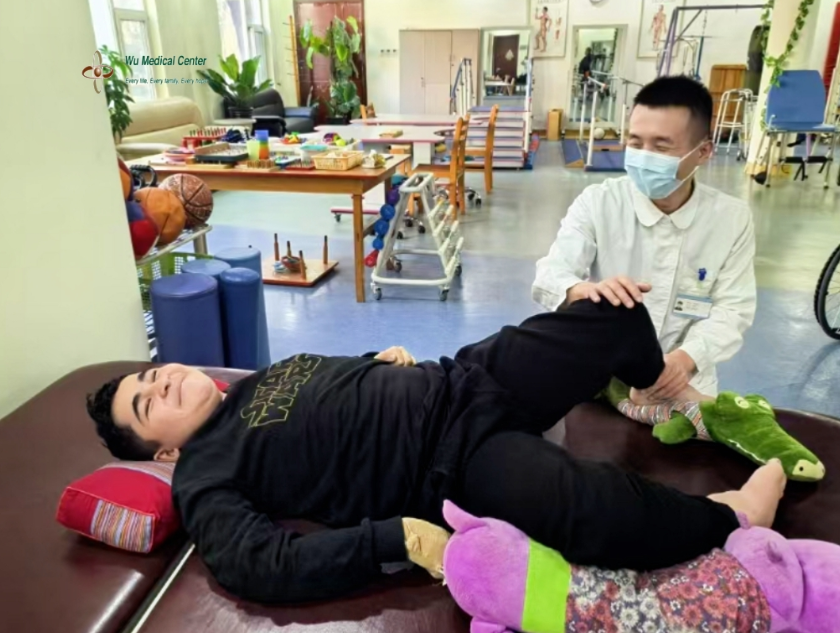
After admission, the patient was clearly diagnosed with Duchenne Muscular Dystrophy. He was given comprehensive treatment including CAST therapy, combined treatment with two types of stem cells (mesenchymal stem cells and neural stem cells), myofiber repair, muscle tissue nutrition, circulation improvement, immunomodulation, and rehabilitation training.
Post - treatment Condition
The patient's motor function is improved significantly. His head posture is basically normal when sitting, and the flexibility of his forearms and hands is enhanced. The muscle strength of his upper arms reaches grade 2, and the muscle strength of his forearms and grip strength of his hands reaches grade 4. He can slowly turn over when lying on his back. His waist and abdominal strength are improved: he can sit up independently when lying on his back at 30 degrees, and the auxiliary force required to get up from a supine position is less than that at admission. The muscle strength of his lower limbs reaches grade 2+. He can independently complete two - point support by lifting both knees off the bed passively, and can control the swing direction by himself, with the right side slightly better than the left side. His general pain and tenderness are significantly relieved, and he feels no pain during normal activities. His cardiac function is improved, and his heart rate remains stable after physical activity. His elevated creatine kinase (CK) level is decreased significantly compared with that at admission.