Tamara Der Vil-Amyotrophic Lateral Sclerosis (ALS)-(Serbian)
 Patient Name: Tamara Der Vil
Gender: Female
Age: 50 years old
Nationality: Serbian
Diagnosis: Amyotrophic Lateral Sclerosis (ALS)
Admission Condition:
The patient was admitted with a diagnosis of amyotrophic lateral sclerosis due to progressive weakness and muscular atrophy in the four limbs for 2.5 years. She developed weakness in her right hand and fingers without obvious cause two years ago, and was diagnosed with ALS at a local hospital. She has been taking Riluzole 50 mg every 12 hours since then, with limited efficacy and continuous disease progression. At present, the patient presented with significantly reduced muscle strength in all four limbs, accompanied by muscular atrophy and fasciculations, with more severe weakness in the upper extremities. She had poor strength in both upper arms and hands, and could barely perform fine motor activities with both hands. Her physical capacity and endurance were markedly decreased; she was unable to stand up independently, and walked unsteadily and extremely slowly. She had a history of primary hypothyroidism and was currently taking Levothyroxine Sodium alternately at 75 µg and 100 µg daily. She also took dietary supplements including magnesium, zinc‑selenium capsules, and coenzyme Q10.
Physical Examination on Admission:
The patient had a respiratory rate of 18 breaths per minute, a heart rate of 60 beats per minute, and a blood pressure of 106/75 mmHg. She was 166 cm in height and weighed 60 kg. Her development was normal, with a eupigmentic physique. There was no cyanosis of her lips. The thoracic respiratory excursion was essentially normal; breath sounds were diminished in both lower lungs, and no obvious dry or moist rales were audible. Her heart sounds were strong and rhythmic, with no murmurs heard in any valvular areas. The abdomen was flat and soft, and the liver and spleen were not palpable under the costal margin. No edema was noted in both lower extremities.
Neurological Examination:
The patient was conscious and alert with normal mentality. She had mild slurred and dysarthric speech. Her calculation, memory, and orientation were essentially normal. Both pupils were 3 mm in diameter. Bilateral nasolabial folds and forehead wrinkles were symmetric; tongue protrusion was midline with mild tongue atrophy and slow movement. She had good cheek puffing strength and acceptable masticatory power, accompanied by mild dysphagia and occasional choking when drinking water. Bilateral soft palate elevation was adequate, with slight left deviation of the uvula. Muscle strength for neck rotation and shoulder shrugging was grade 3–. Muscle strength of the left upper extremity was grade 2+, grip and wrist strength of the left hand grade 2–; right upper extremity grade 2–, grip and wrist strength of the right hand grade 1. She was unable to grasp with either hand, had difficulty elevating both upper extremities, and could barely resist; interosseous muscle strength of both hands was grade 1, unable to hold a pen. Muscle strength of both lower extremities was grade 3–. She could not stand up from the bed independently, walked extremely slowly and unsteadily due to weakness, was unable to stand on one leg, and could not climb stairs. Muscle atrophy was observed in all four limbs with occasional fasciculations. Sensory function was essentially normal in the extremities. Muscle tone was basically normal. Tendon reflexes were decreased in all four limbs; pathological reflexes were positive in both lower extremities. Meningeal irritation signs were negative.
Treatment Course:
The patient was admitted with a confirmed diagnosis of amyotrophic lateral sclerosis (ALS). During hospitalization, she received neural stem cell therapy to repair motor nerve injury, and mesenchymal stem cell therapy for neurotrophic, endocrine and immune support. Adjuvant medications included edaravone, riluzole, neurotrophic factors, reduced glutathione and other drugs in a CAST regimen, combined with comprehensive rehabilitation therapy.
Post-Treatment Condition:
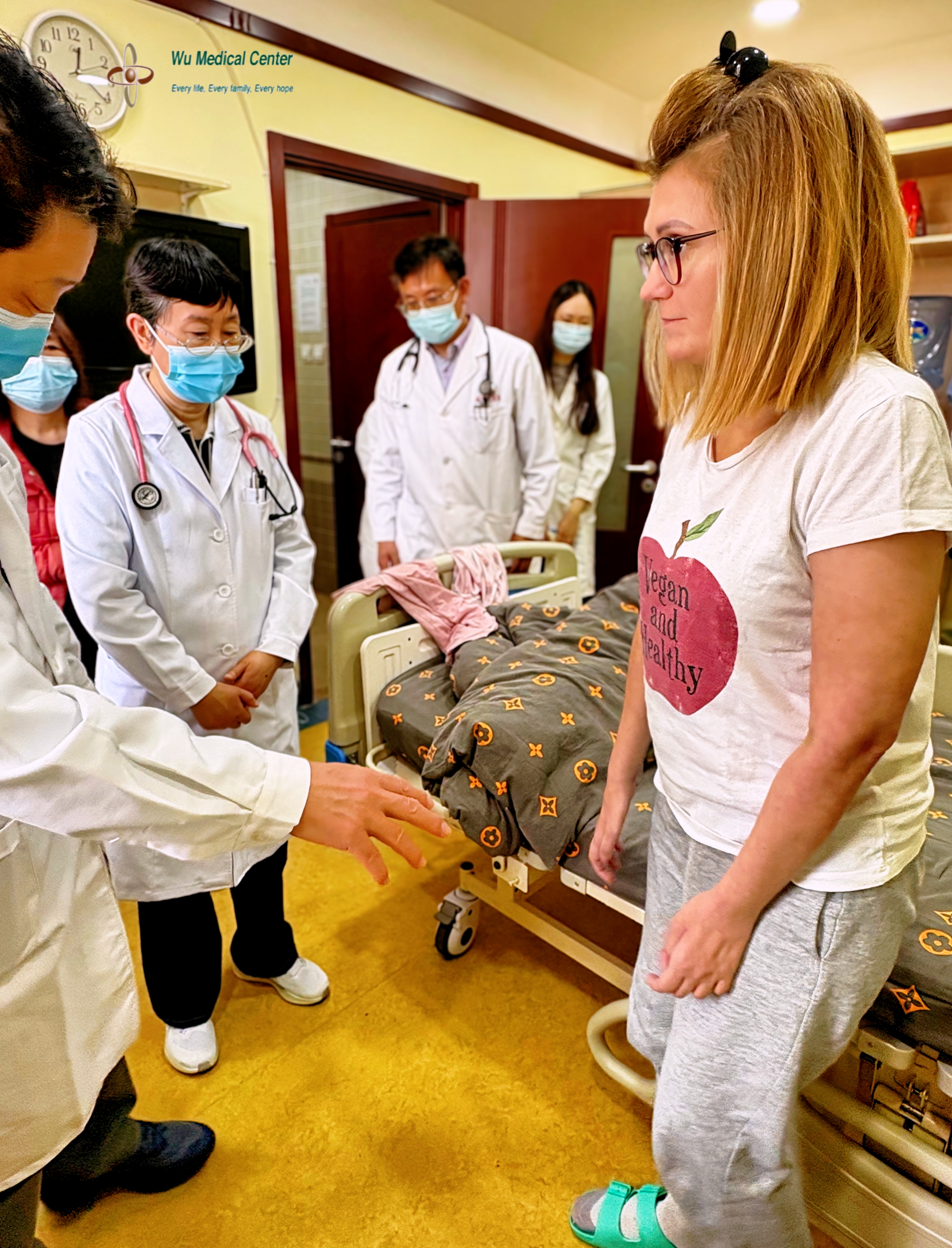
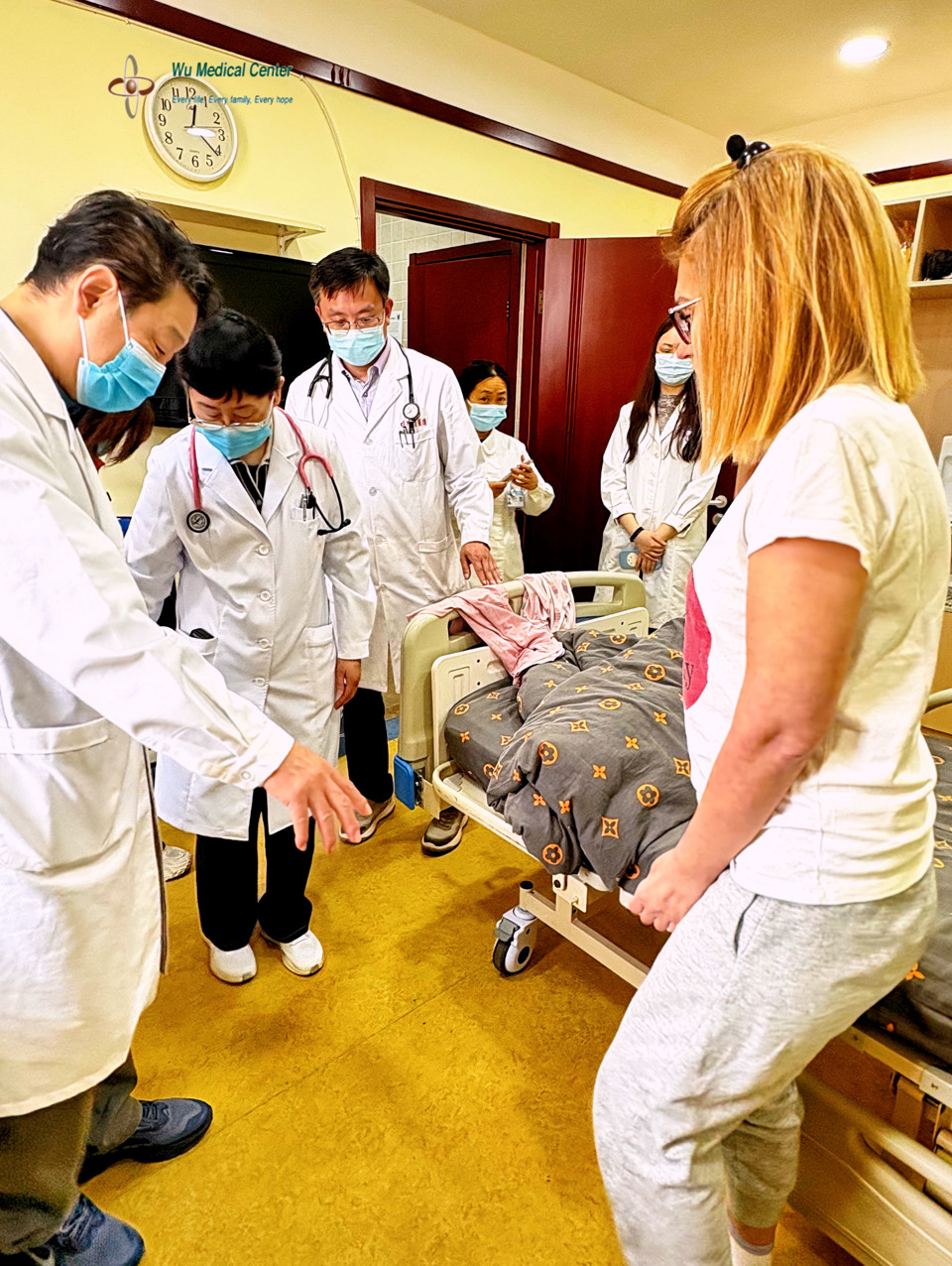
The patient’s motor function is improved significantly. Muscle strength for neck rotation and shoulder shrugging is increased to grade 4–. Bilateral upper extremity elevation is improved, with arms able to be raised to the forehead level; muscle strength of the left upper extremity is grade 3+, and the right upper extremity grade 3. Hand grip strength is increased markedly, with improved grasp and extension function, better finger mobility, and finer movements more flexible than on admission. Left hand grip and wrist strength are grade 3–, right hand grip and wrist strength grade 2+; both hands can grasp two fingers of an examiner. Muscle strength of the lumbosacral abdomen and lower extremities is increased to grade 4. She can stand up independently from a low sofa with significantly faster speed, and sit down from standing without assistance with controlled speed. Ambulation is improved: walking is more stable without swaying, with faster speed, longer distance and more flexible turning. She can climb stairs slowly and independently. Her mental status and physical endurance also are improved.