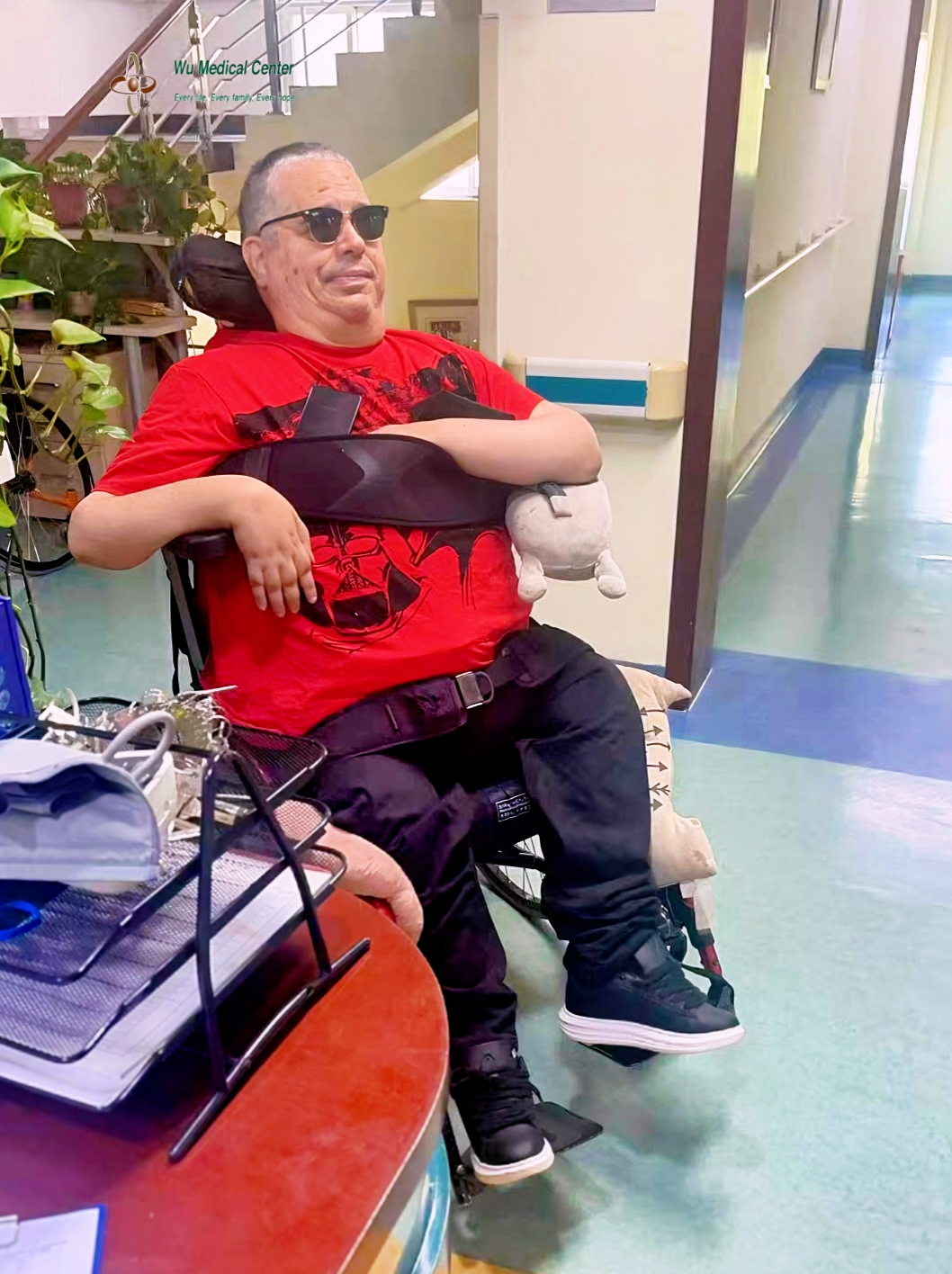
Fausto Simone-Motor Neuron Disease-Progressive Spinal Muscular Atrophy(PSMA)-(Argentine)
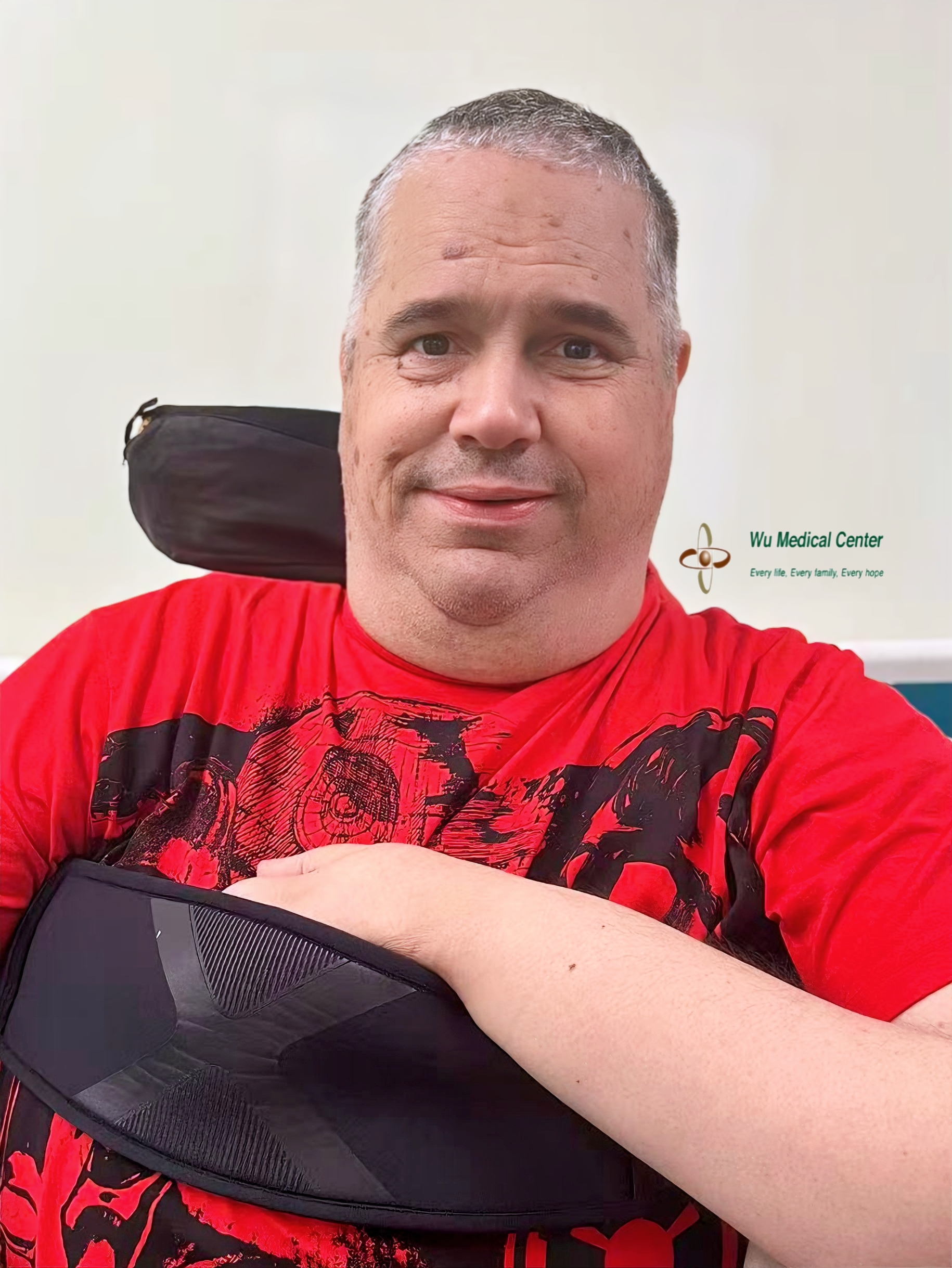 Patient Name: Fausto Simone
Gender: Male
Age: 56 years old
Nationality: Argentine
Diagnosis: Motor Neuron Disease - Progressive Spinal Muscular Atrophy (PSMA)
Condition on Admission:
At the age of 6 months, the patient’s family noticed weakness in the movement of his extremities. Genetic testing at a local hospital confirmed the diagnosis of "Motor Neuron Disease - Progressive Spinal Muscular Atrophy (PSMA)". Before the age of 11, he could move his limbs voluntarily and independently perform simple daily activities such as writing and using the toilet. Over the following more than 40 years, his motor function gradually declined, with nearly complete loss of limb function, retaining only slight adduction movement of both thumbs. He has weak phonation, slurred speech and labored breathing. He previously received 3 sessions of Neural Stem Cell + CAST Therapy at Wu Medical Center. After each treatment, he experienced improved motor function and halted/slowed disease progression: his respiratory function improved, voice volume increased, speech became clearer, and limb mobility was enhanced. In recent years, due to the COVID-19 pandemic, he was unable to return for further treatment, and his condition gradually worsened. On admission, the patient was conscious, with weak phonation, unclear enunciation, occasional choking during drinking water, almost no finger movement, and only slight adduction of both thumbs by approximately 0.2 cm.
Physical Examination on Admission:
Pulse: 82 beats per minute, Respiratory rate: 20 breaths per minute, Blood pressure: 128/80 mmHg. Marked protrusion of the left thoracic cage. Breath sounds at the bases of both lungs were diminished, with no obvious dry or moist rales detected. Heart sounds were faint, heart rhythm regular, with no obvious murmurs. Abdomen was distended with tympany. Shortened extremities, marked pitting edema over bilateral ankles and dorsa of feet. Right scoliosis of the spine. Bilateral elbow and knee joint contractures with inability to fully extend; passive elbow extension reaches 75 degrees, passive knee extension reaches approximately 100 degrees.
Neurological Examination:
The patient was conscious with slurred speech. Orientation, insight and calculation ability were intact. Pupils were 3 mm in diameter bilaterally, with normal pupillary light reflex. No facial deviation when showing teeth. Weak masticatory and swallowing strength. No longer needs a cervical collar to support the head in upright position. Muscle strength for left head rotation: grade 2-, muscle strength for right head rotation: grade 2-. Shoulder shrugging movement could be observed. Proximal muscle strength of bilateral upper extremities: grade 0. In passively elevated position of bilateral upper limbs, muscle strength for adduction and abduction of left thumb: grade 1+, muscle strength for adduction and abduction of right thumb: grade 1+. Muscle strength of the remaining fingers: grade 0. Muscle strength of bilateral lower extremities: grade 0. Muscle atrophy was noted in extremities, shoulder girdle and trunk. Reduced muscle tone in all extremities. Abdominal reflex and tendon reflexes of extremities were absent. Bilateral palmomental reflex negative, pathological reflexes of extremities negative. Sensory examination was normal.
Treatment Course:
The patient was admitted with a confirmed diagnosis of Motor Neuron Disease - Progressive Spinal Muscular Atrophy (PSMA). During hospitalization, he received neural stem cells to repair motor nerve injuries, mesenchymal stem cells for neurotrophic, endocrine and immune support. Adjuvant CAST therapy with Edaravone, neurotrophic factors, Monosialotetrahexosylganglioside, Reduced Glutathione and other medications was administered, combined with comprehensive rehabilitation therapy.
After Treatment:
The patient’s motor function is improved. His voice becomes louder, articulation clearer, enabling fluent verbal communication with others. Neck rotation muscle strength is improved to grade 2. The adduction function of both thumbs is enhanced: muscle strength for adduction and abduction of left thumb: grade 2, muscle strength for adduction and abduction of right thumb: grade 2, with a range of motion of 1 cm. Slight flexion of the index finger is observed with a range of 0.3 cm. Mild wrist joint movement is appeared. The range of motion of limb joints is increased: passive elbow extension reaches 95 degrees, passive knee extension reaches approximately 120 degrees. Cardiopulmonary function is improved; bilateral lung breath sounds are significantly enhanced. Blood oxygen saturation maintains above 95%, peaking at 97-98%. Respiratory rate at rest is approximately 18–20 breaths per minute.