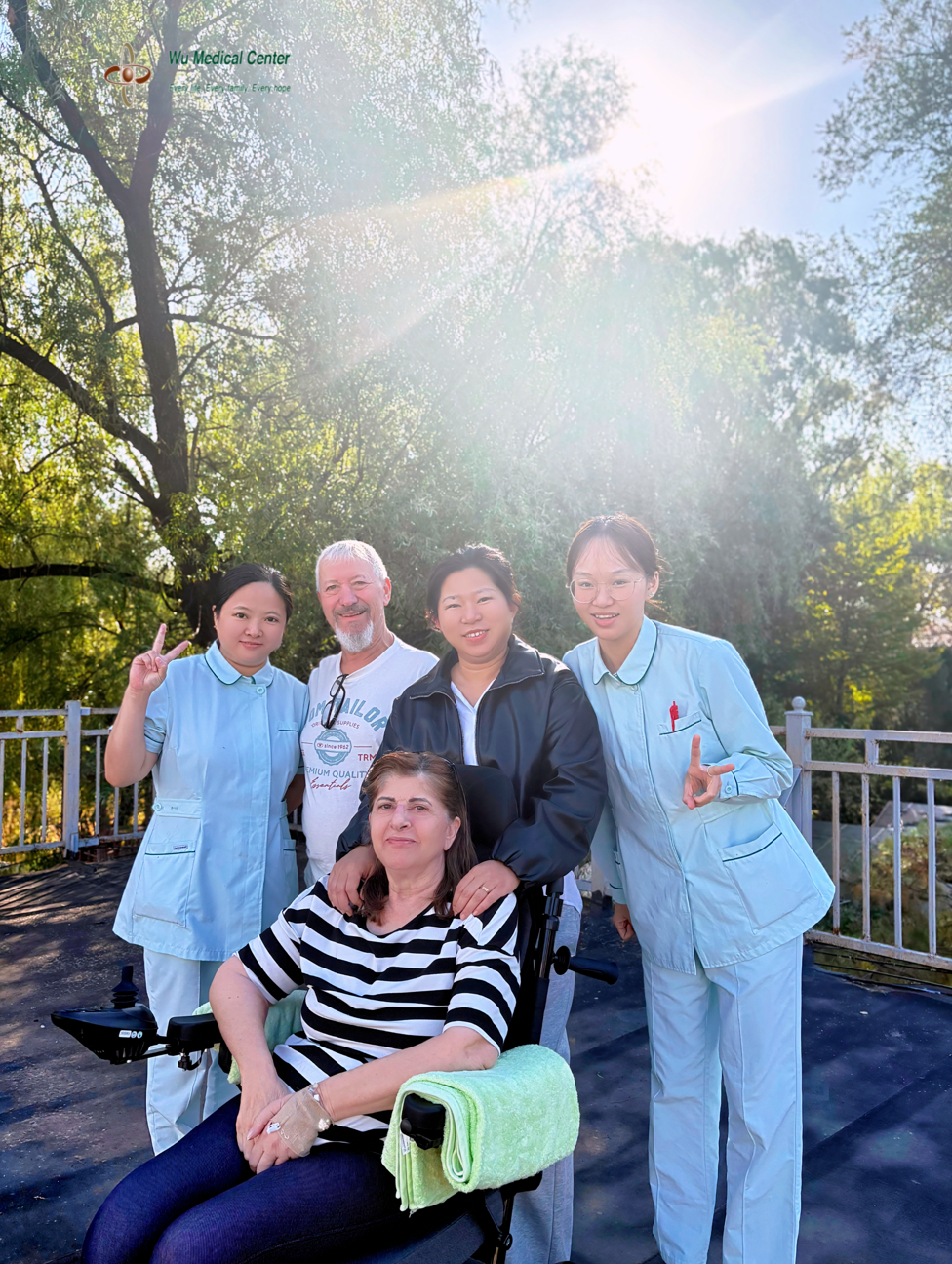
Disease progression halted; systemic motor function indicators improved by over 30%; cardiopulmonary function enhanced; atrophied muscles regained bulk. With support from WMC, a patient living with MND for 3 years smiled with confidence.
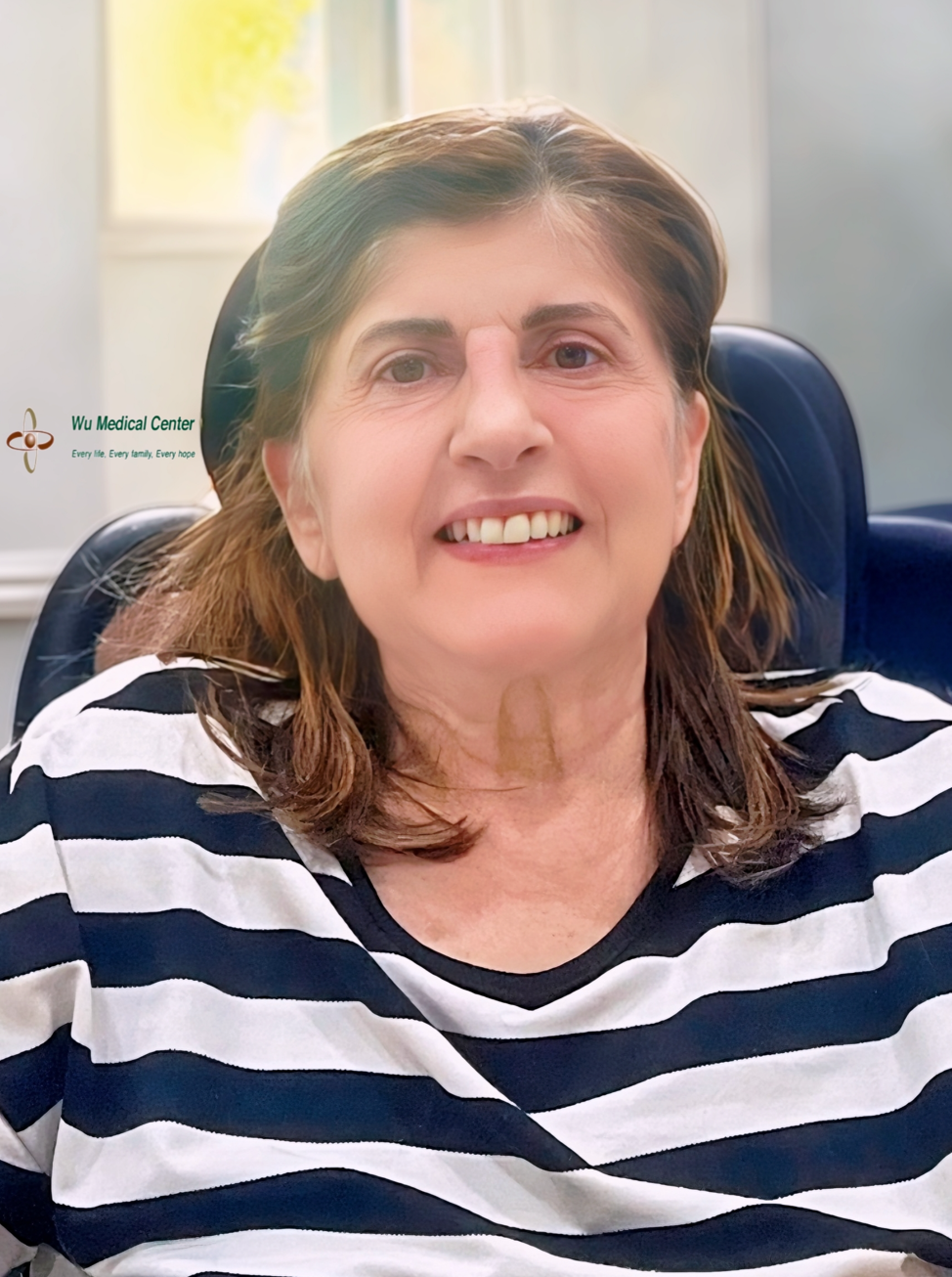 Ms. Sylvia Pace, an elegant 62-year-old lady from Malta, was unfortunately diagnosed with MND. Over the past 3 years, she suffered from progressive limb weakness and muscular atrophy. Her symptoms worsened in the most recent three months, accompanied by dyspnea. 3 years ago, she developed left arm weakness with muscle fasciculations without obvious precipitating factors. Local hospitals suspected carpal tunnel syndrome and performed surgical intervention. Instead of relief, her condition gradually deteriorated after surgery. At presentation, she had difficulty elevating both upper limbs, more severe on the left, and could not grasp objects with her left hand. She could not stand independently and could barely rise with assistance. She had marked foot drop bilaterally and needed an ankle-foot orthosis. Her assisted walking distance decreased; she could only walk slowly for 5 meters with support. Her voice became weak, with occasional dysphagia. She experienced dyspnea when lying flat and required semi-recumbent positioning plus non-invasive ventilator support. She fatigued easily, accompanied by muscular atrophy and arthralgia. She was taking oral medications including riluzole and coenzyme Q10.
Nevertheless, local treatments failed to stop disease progression and worsening systemic symptoms. Her whole family realized that to rescue Ms. Sylvia Pace from this debilitating disease state, seeking cutting-edge global medical technologies had become urgent.
Since the early days of global research into stem cell therapy for MND, Dr. Wu has been deeply engaged in clinical research of stem cells for central nervous system disorders. He has built an outstanding hospital reputation and personal acclaim for documented disease arrest and clear symptom improvements observed in patients during hospitalization. He is one of the world’s preeminent, consistently leading clinical specialists in stem cell therapy and neurology worldwide.
Dr. Wu’s original, globally unique dual-stem-cell + CAST clinical therapy has genuinely helped numerous MND patients over more than 20 years. After inpatient treatment at Wu Medical Center, these patients all found that Dr. Wu’s innovative therapy truly helps them live better. They realized that state-of-the-art clinical therapies worldwide are accessible to ordinary patients, and everyone can benefit from the world’s finest medical achievements.
By browsing the official Facebook account of Wu Medical Center, one can see that through over 40 years of relentless dedication to medical knowledge and clinical stem cell therapy innovation, with abundant safe and successful clinical cases and a humble scholarly demeanor, Dr. Wu has earned the attention and affection of a large following.
Ms. Sylvia Pace finally had the chance to receive treatment at Wu Medical Center and witness how MND — long regarded as an incurable disease in medical textbooks — was miraculously brought within treatable range by Dr. Wu.
After merely 2 weeks of inpatient treatment, Ms. Sylvia Pace achieved clear improvements in motor function and cardiopulmonary function.
Before treatment: She had limb weakness. She had difficulty elevating both upper limbs, worse on the left; unable to grasp items with her left hand.
After treatment: Muscle strength increased. While seated, she could lift her left upper arm relatively easily overhead. Muscle strength and weight-bearing capacity of her right upper limb improved.
Before treatment: Left wrist extensor strength Grade 0 (positive wrist drop sign), left hand grip strength Grade 1+, left interphalangeal flexor strength Grade 1 (unable to perform opposition).
After treatment: Her left hand achieved partial thumb-finger opposition; the middle and ring fingers could oppose the thumb, while the index and little fingers demonstrated obvious, relatively easy palmar flexion. Finger dexterity and grip strength improved.
Before treatment: Right hand grip strength Grade 4. Widespread limb muscular atrophy, most prominent in the left thenar, hypothenar and interosseous muscles.
After treatment: Muscle bulk of the right thenar eminence increased compared with baseline; right hand grip strength reached nearly normal Grade 5.
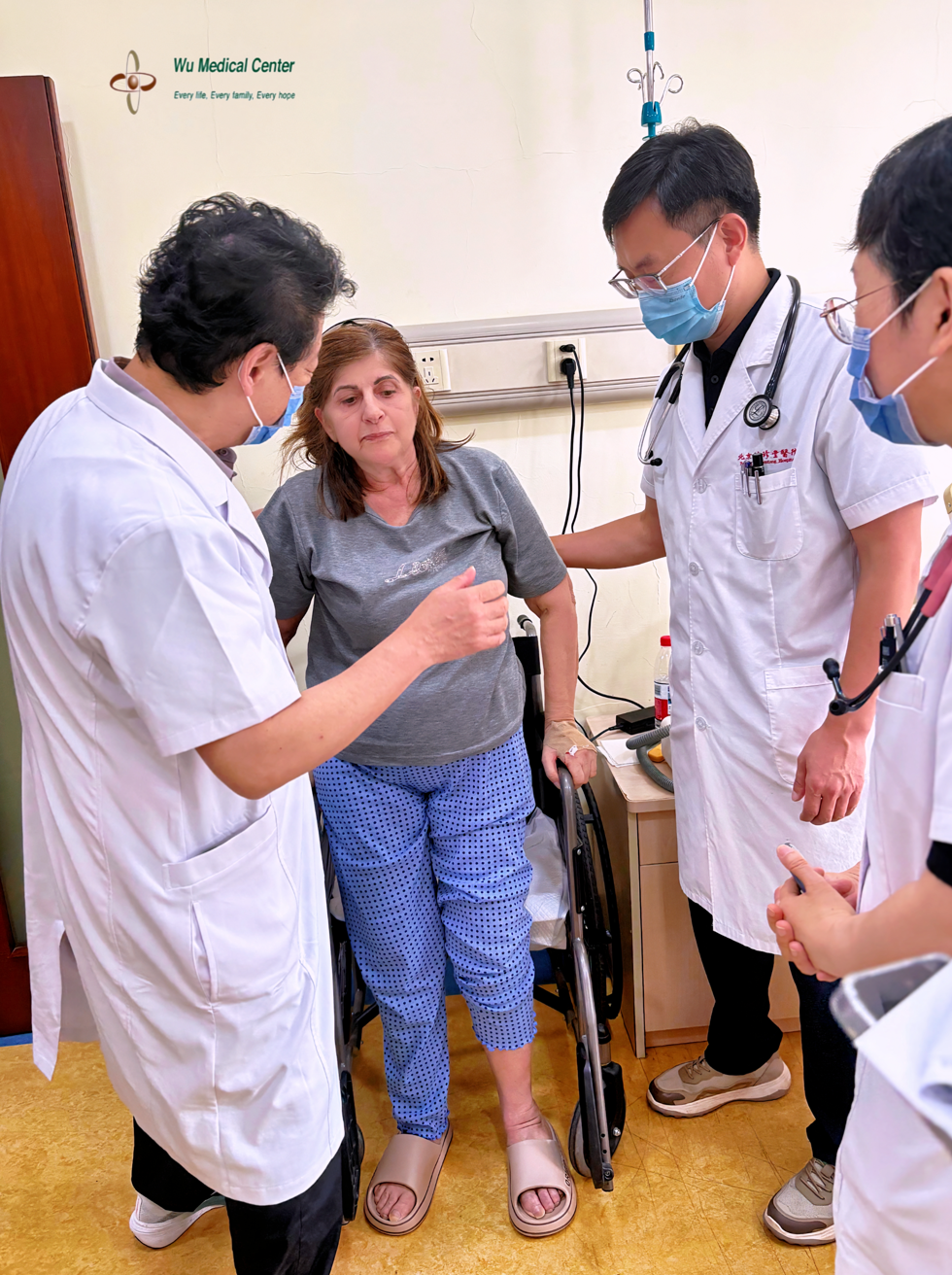
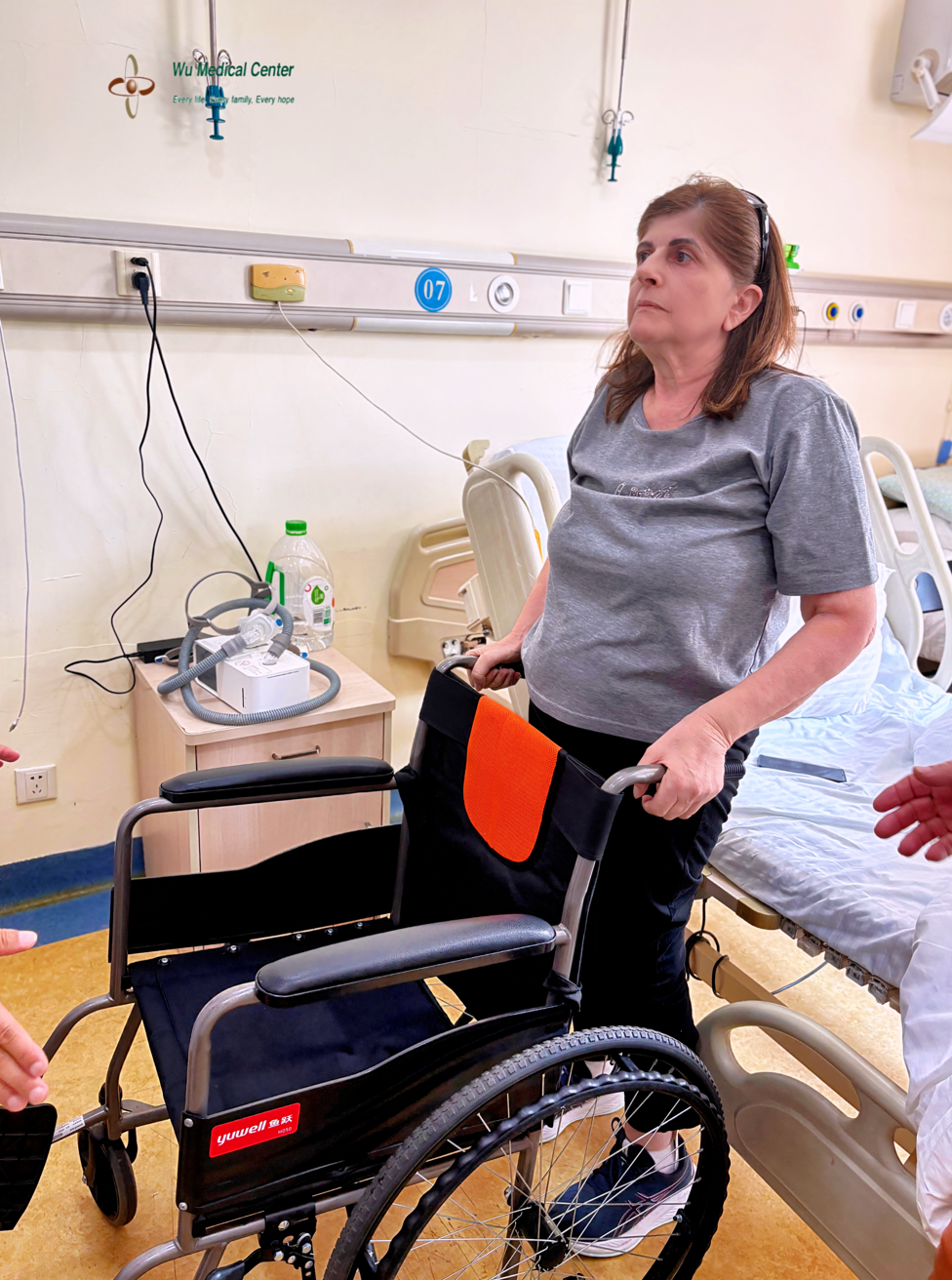
Before treatment: Unable to stand independently; could barely rise with assistance. Marked bilateral foot drop requiring ankle-foot orthosis. Reduced assisted walking distance; she could only walk slowly for 5 meters with support.
After treatment: She could rise from sitting independently and walk 20 meters unassisted with a walker. Foot dragging was minimal, and she could turn slowly.
Before treatment: Strength for neck rotation and shoulder shrugging reduced (Grade 4-).
After treatment: Neck rotation and shoulder shrugging strength mildly reduced (Grade 5-).
Before treatment: Left biceps brachii strength Grade 2+, triceps brachii Grade 2+, wrist extensor Grade 0 (positive wrist drop sign), grip strength Grade 1+, interphalangeal flexor Grade 1; proximal right upper limb strength Grade 3+, grip strength Grade 4.
After treatment: Left biceps brachii strength Grade 3+, triceps brachii Grade 3+, wrist extensor Grade 1+, grip strength Grade 3+, interphalangeal flexor Grade 2+; proximal right upper limb strength Grade 4-, grip strength Grade 5.
Before treatment: Proximal left lower limb strength Grade 3-, distal strength: foot dorsiflexion Grade 1 / plantar flexion Grade 2; proximal right lower limb strength Grade 2+, distal strength: foot dorsiflexion Grade 2 / plantar flexion Grade 2.
After treatment: Proximal left lower limb strength Grade 4-, distal strength: foot dorsiflexion Grade 2 / plantar flexion Grade 3; proximal right lower limb strength Grade 3+, distal strength: foot dorsiflexion Grade 3 / plantar flexion Grade 3.
Before treatment: Heart rate 85 bpm, respiratory rate 30 breaths/min, blood pressure 145/98 mmHg, oxygen saturation 93%. Mild cyanosis of the lips. Diminished thoracic respiratory excursion, faint breath sounds in bilateral lower lungs. Heart sounds were weak. She had dyspnea when supine and required semi-recumbent positioning with non-invasive ventilator.
After treatment: Cardiopulmonary function improved. Right lung breath sounds were louder than baseline, oxygen saturation sustained above 95%. Respiratory rate at rest was approximately 20–24 breaths per minute.
Before treatment: She fatigued easily all over the body.
After treatment: Energy and physical endurance improved markedly.
At WMC, Ms. Sylvia Pace experienced not only Dr. Wu’s remarkable medical technology — disease progression halted, average improvement of over 30% across systemic functional indices — but also gained confidence for her and her family in life after returning home. She smiled joyfully!
We hope to accompany more MND patients like Ms. Sylvia Pace to experience the cutting-edge dual-stem-cell plus CAST therapy at WMC, different from conventional medicine, to halt disease progression, improve motor function, elevate their quality of life, and face their future lives with confidence.
To learn more information of Ms. Sylvia Pace’s patient story, please refer to the following link:
Sylvia Pace-Motor Neuron Disease (MND)-(Malta)